
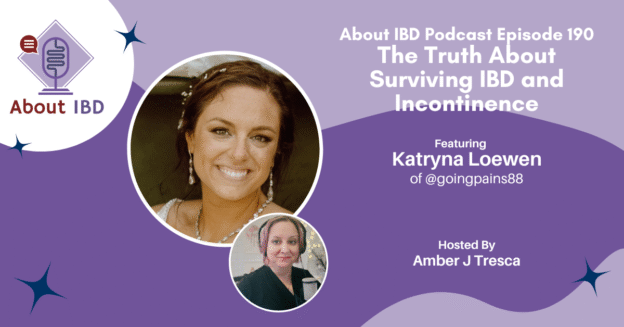
Katryna Loewen, a registered nurse diagnosed with ulcerative colitis in 2020, shares her journey through severe flare-ups, incontinence, and her decision to have a colectomy and ileostomy in 2024. She discusses the emotional and physical challenges of living with IBD, the stigma of ostomies, and how these experiences shaped her life, relationships, and career. Katryna also describes managing her mental health, planning her wedding, and preparing for motherhood, offering hope and practical advice to others with IBD.
Find Katryna Loewen at:
- Instagram: @goingpains88
Find Amber J Tresca at:
- AboutIBD.com: About IBD
- Verywell: Verywell Health
- Facebook: @aboutIBD
- Twitter: @aboutIBD
- Pinterest: @aboutibd
- Instagram: @about_IBD
- YouTube: @AboutIBD
- Threads: @about_IBD
Find Mac Cooney (mix, sound design, and theme music) at:
- Facebook: @maccooneycomposer
- Instagram: @maccooneycomposer
- Web: Cooney Studio
- YouTube: @MacCooneyComposer
- Theme music, IBD Dance Party, is from ©Cooney Studio.
These show notes may contain affiliate links. If you choose to purchase after clicking a link, Mal and Tal Enterprises, LLC may receive a commission at no extra cost to you.
Listen and Subscribe to About IBD: Apple Podcasts | Spotify | Overcast | Castbox | Amazon Music | All Other Podcast Apps
Chapters
- 00:04 Introduction and Guest Background
- 02:09 Katryna’s Nursing Career
- 03:08 Ulcerative Colitis Diagnosis
- 04:48 Remission and Flare-Ups
- 05:09 Severe Flare in 2023
- 07:08 Decision for Surgery
- 10:36 Facing Ostomy Surgery
- 14:08 Acceptance and Life with an Ostomy
- 16:08 Impact of IBD on Mental Health
- 17:18 Incontinence Experiences
- 23:31 Tracking Symptoms and Advocacy
- 26:23 Wedding with IBD
- 28:45 Therapy and Emotional Recovery
- 32:06 Pregnancy After Ostomy Surgery
- 37:50 Preparing Pets for Baby
- 41:54 Support Networks and Advice
- 43:32 Where to Find Katryna
- 43:38 Closing Remarks
Transcript
[Music: IBD Dance Party]
Amber Tresca 00:00:04 I’m Amber Tresca, and this is About IBD. I was diagnosed with ulcerative colitis as a teen and had pouch surgery ten years later. Now I help people with Crohn’s disease and ulcerative colitis understand their disease and feel seen on About IBD. You’ll get real talk on symptoms, treatment, and life with IBD straight from patients, caregivers, and experts. You’ll learn, feel less alone, and even have a laugh along the way.
My guest is Katryna Loewen, a registered nurse with a background in labor and delivery, surgical nursing, and public health. She navigated the path between caregiver and patient after being diagnosed with IBD. Her disease became unmanageable medically, and she had a connectome and ileostomy placement in 2024. She navigated incontinence, abscesses, and the toll IBD took on her mental health. But today she’s married and expecting her first child. She’s ready to show us how she’s living fully with an ostomy, enjoying her freedom and her love of cooking and food again. Katryna, welcome to About IBD.
Katryna Loewen 00:01:16 Thank you. Thanks for having me.
Katryna Loewen 00:01:18 I’m really excited.
Amber Tresca 00:01:19 Oh, so am I. And I want to introduce our topic for today, which is acknowledging and coping with the realities of IBD, including incontinence and surgery, and how these things affect our major life decisions. You and I definitely have some overlap in these categories, so I’m very interested to get your take on all of them and then to provide maybe a little bit of my own experience as we go through this so that you’re not alone in discussing these difficult topics. But first, Katryna, I want listeners to hear a little bit more about your background in healthcare because I think it is such an important part of your story. So, would you first talk a little bit about your work as a nurse and your work in public health?
Katryna Loewen 00:02:09 Yeah. So right after I graduated high school, I went to do my nursing degree and started working right away. I worked at one of the hospitals in southern Manitoba for years and just wonderful hospital, wonderful team. Like loved it there. A lot of my friends now are people that I met on the ward, so we did maternity.
Katryna Loewen 00:02:29 So deliveries, postpartum C-sections, absolutely loved it. And we were split wards. We also did surgical. So we did have some people that would have had colectomy surgery and then also ortho things like that. And I was there for about 7 or 8 years until I moved. Yeah, like I moved in with my husband and then switched into public health. It’s work-life balance. It’s closer to home, and I get to do a lot of postpartum visits, immunization, communicable disease, and just education around health. So I love it. I love being a nurse. That’s been wonderful.
Amber Tresca 00:03:08 Oh, that’s so great to hear. And I’m always in awe of the labor and delivery nurses. I had some really amazing ones. One of my births was an emergency. So it is, you know, those gals are near and dear to my heart. So you were diagnosed with ulcerative colitis in 2020? Unfortunately. Could you tell us how it started and how you got your diagnosis?
Katryna Loewen 00:03:38 Absolutely. So it started in November.
Katryna Loewen 00:03:41 Like I remember very distinctly. It was during the time that we were starting to deal with COVID on the ward, or just globally dealing with COVID, and everyone was really stressed, and there was no vaccine yet. Kind of on the horizon, but not available. So during that kind of scary time, and I started having diarrhea and multiple bowel movements a day, and that lasted for quite a while. Abdominal pain. My nurse practitioner was wonderful. Like, I know a lot of people have to advocate for themselves quite a bit. I was very lucky in that he was like, yeah, okay, we’re going to do a scope. I had that December 24th. Merry Christmas to me.
Amber Tresca 00:04:24 It’s funny when it takes place around holidays and stuff, because then you definitely don’t forget those dates.
Katryna Loewen 00:04:30 No, it was not my favorite Christmas gift, but that’s okay. And. Yeah. So then right away, they’re like, yeah, there’s inflammation colitis. They started me on mesalamine, and that took a few months, but then I improved pretty quickly.
Amber Tresca 00:04:48 Do you feel like you were experiencing remission? Potentially.
Katryna Loewen 00:04:54 Yeah. Like, I could eat whatever I wanted. I just felt like there were times when I was like, “Do I actually have colitis or are we sure?” And then the universe was like, “No, no, we’re sure. We know.”
Amber Tresca 00:05:09 Yeah. So when you had that second flare-up in 2023, how did it compare to the first one that you were diagnosed from?
Katryna Loewen 00:05:21 Oh, totally different. It started in September of 2023. And I mean, like, started with a little bit of abdominal pain, a little bit of blood, and diarrhea. And then it just escalated to the point where my diet was rice and eggs. If that, I was skipping lots of meals, I was losing. I think I lost 50 pounds total over the course of a year. And then like, we’re going to talk about like, the incontinence and the abdominal pain. It was just a whole different ball game that time. And then we got into the testing, different meds, scopes, and meeting with the colorectal surgeon, and kind of all those conversations and decisions.
Amber Tresca 00:06:05 Yeah. Did it…was it a surprise? Like, were you aware that it could come back? And then when it did, that it could come on so suddenly and then be potentially even worse. Like, how much of this was a surprise to you?
Katryna Loewen 00:06:22 I knew that it could come back. But I wasn’t expecting it to be as long and as hard as it was. And because we were trying different meds, I think each time I thought, okay, the first one in TiVo, this is a really good one. This is going to work. And then it didn’t. And so we’ll try another one. And you kind of have that. This is the one. This is going to work. I need to be hopeful. And then when it doesn’t, or you get a glimmer of it, it works for a little bit. And then it just kept getting worse, and I was never expecting to meet an ostomy. That was a lot of learning, adapting, and doing mental preparation. That was not what I expected at this point in my life.
Amber Tresca 00:07:08 Right. So that flare-up resulted in you having a collective me and an ileostomy placed. Was there a defining moment? Was there something like, we’re going to like this one last thing, or I’m going to give it one more month, or something like that, or what made you finally make the decision?
Katryna Loewen 00:07:29 I think it was. I knew how bad it was. I think I was trying to pretend that it was going to get better for a long time. I did have an amazing colorectal surgeon who really laid out the options and really gave me a choice in what we were going to do, even though at that point, looking back, I’m like, was there a choice? But like, thanks for laying out the options and letting me pretend I had a choice. But he was like, very good at saying, like, you are sick. We really should do something. If you don’t want to do anything, you know that that is an option that’s on the table. But then it’s keeping trying new meds and trying new things, and I don’t think emotionally I could handle that anymore either.
Amber Tresca 00:08:18 Right. Yeah. And then potentially it’s an emergency situation if something really goes wrong, like a perforation or something like that. So, yeah, I think it is so funny that you’re saying, you know, I love that it’s presented to me as a choice, when really the choice is pretty clear. But I think that’s really the hallmark of a surgeon and a physician that really understands the patient experience and really was entering into, you know, shared decision making with you, even though he was probably like, yeah, this is the way to go.
Katryna Loewen 00:08:55 Yeah, he was awesome. Like, it’s…I feel like once we started talking about, like my gastroenterologist talked about, you’re probably going to have to have a temporary ostomy. Like, I remember getting so upset. I was so angry when I went home. And then this other conversation where it was. Okay, well, we could do a permanent ostomy. We could do a temporary one, look at a reversal, which at the time was like 100% like, get me back in there.
Katryna Loewen 00:09:24 We’re doing reversal as soon as we can, or we can try other meds and wait and see what happens. And so I just felt like that was much more empowering. That was a much better conversation. Because I knew what I had to do. I knew what had to be done, but it just allowed a bit of space for me to actually make that decision, which I think went a long way mentally for me.
Amber Tresca 00:09:49 Yeah, that makes a lot of sense. And I think it’s a good reminder that even though sometimes there may be like one clear path that is probably the way to go, but even so, you do need to have other options in front of you. And it helps everybody to mentally cope with that if you are, you know, making that decision, even if it is pretty, you know, pretty clear, that that’s the way to go. So you told me in, as we were preparing this episode, that as a nurse, you had seen patients with ostomy before, but that as you were considering ostomy surgery for yourself, this wasn’t really reassuring for you.
Amber Tresca 00:10:36 So, could you tell me about what was worrying you when you were facing surgery?
Katryna Loewen 00:10:43 Yeah, I think there’s a lot of stigma around having an ostomy, and I remember saying something to my parents like, I don’t want to poop bag on my stomach and this and that. And, I was seeing clients in the hospital just after having surgery, so still trying to figure out what is the right fit, what’s the right bag. So you’re having leaking and all of these things, and I did have post-op too, until I found the right bag that worked for me. So that was disheartening. But like, once you get the right bag, you’re good. And the other thing was that clients were not at a point of acceptance when I was seeing them in hospital, they were still in a point of, they were not excited. They were not happy. They were recovering. And I was definitely there to like, I don’t think anyone is excited right after their ostomy surgery. Like, I was definitely relieved after my ostomy surgery.
Katryna Loewen 00:11:42 I was happy not to be actively in pain, but I wasn’t thrilled about the idea. And down the road, like, if, you know, someone saw me post up and someone saw me a few months later, when it’s like, hey, look at all these bag covers, and I’m doing things and I’m going to the pool. And, it’s you’re seeing people at a very difficult and vulnerable time. And at the time, I wasn’t interested in looking and finding people living their life with ostomy. So that was the very narrow view that I had of living life with an ostomy.
Amber Tresca 00:12:20 That’s a very good point that I hadn’t considered before. And what were some of the indications for which people were having surgery? Was it usually IBD? Was it colon cancer trauma? Other. Because I think there’s also a difference between being diagnosed with ulcerative colitis. And for you, it happened really quickly. But I had ten years to sort of wrap my brain around and probably, eventually going to have to have this surgery.
Amber Tresca 00:12:51 So, how, you know, what were folks having their ostomy for? And do you think that makes a difference in the acceptance?
Katryna Loewen 00:13:01 Actually? Yeah, that’s a good point. I think that it would be. So, at our facility, it would have been more emergency surgery for a perforation. Sometimes, maybe it might have been cancer. I can’t remember now, but a lot of the people with IBD were probably being followed by someone in the city, so would likely be having that there. So I think it was more, yeah. Emergencies or because of other health issues that were not IBD-related.
Amber Tresca 00:13:37 This wasn’t where they were expecting to be. They weren’t expected to wake up, maybe, with an ileostomy. So I think it’s a little. It’s a little different. So, do you think there was any particular moment when you realized that: “Wow. Yes. This is better. Having an ostomy is better than walking around with inflammation and the ulcerative colitis in an uncontrolled state.”
Katryna Loewen 00:14:08 Well, I was very lucky because I listened to an episode of your podcast, like, ten days before I was going to have surgery. And it was like, it’s still so vivid to me because it was such a turning point. I was trying to find the community I was trying to find, like, where are the people that have the ostomy that are happy and are going to tell me that it’s going to be okay? And like, I’ve been listening to your episodes. Absolutely. But then you had Hannah Martin Spencer on. And so I’m listening to this person in their 20s talk about how they chose to have an ostomy because of health conditions. Right. But like, and talking about intimacy with their partner, and living life again, and how hard it was before, and I just remember standing in my yard and being like, you know what? Like, it’s going to be okay now. And I just feel like, and I know I messaged you guys after, I was like, I just feel like I needed to hear that.
Katryna Loewen 00:15:03 I felt like it was recorded for me. So that was a big moment for me. And then after I just, being able to not be panicked about, like, what I was about to eat, which were a lot of moments that I took for granted, or even sleeping through the night again, and being able to shift my body without worrying about running to the bathroom. So there were a lot of little moments like that. And then, now I try because it’s all so normal again, I try to enjoy, like going to a restaurant with my husband, or playing with my nieces and nephews, and feeling well, and just enjoying those moments again. So it’s, I mean, every day. I know it was the right decision. But I try to still keep that in the forefront and appreciate those moments still.
Amber Tresca 00:16:00 Oh, I have chills. So if I didn’t, if I wasn’t worried about my makeup, I’d be crying right now.
Katryna Loewen 00:16:08 It’s so emotional to talk about now. Like, and I think about even having conversations with people, my brain was always split in half.
Katryna Loewen 00:16:17 Was that a twinge in my stomach? Where’s the nearest bathroom? And so, even like, I just realized now how much more I can pay attention and be present in, like, relationships in my life, because that was not happening for a long time. And the mental toll that even that had on my system is just wild to think about now.
[MUSIC: About IBD Transition]
Amber Tresca 00:16:41 Up next, Katryna tells us how she dealt with a horrible flare-up at her wedding.
[MUSIC: About IBD Transition]
All right, Katryna, I want to move on to talk about incontinence because you have been so open about experiencing that as part of your IBD. And so I wonder if you could tell me how it started and then how you managed it while it was happening.
Katryna Loewen 00:17:18 Well, like actively while it’s happening, I didn’t do a whole lot, and neither did my body. But it started in March of 2024, and just like, so abruptly, like my hand is on the bathroom door, and my body’s just like, no, no, don’t feel like it.
Katryna Loewen 00:17:38 So that’s very traumatic. And also the trauma of, like, every twinge you feel. Is this going to happen? And then I think it happened, like, somewhere around 15 times, like over the course of March until October. And so, like, it’s so frustrating when you think the meds are working and you get dressed up in this cute outfit and then it happens again. And, I remember one time it took me by surprise, and then I was standing in the pharmacy, totally embarrassed, because no one talks about this happening. And like, I’m in my 30s and this is not happening to anybody else, I’m sure of it. And I’m pulling out my phone, and I pretend to dial mentally like I was in character. I was calling my mom to figure out what my grandma needed. And I’m on the phone and I’m looking at the wall of adult diapers, and I’m like, well, there’s these ones. And this one has like a scent. Do you want medium? Large? Like having a full-on conversation, so no one would know I was buying these for myself.
Katryna Loewen 00:18:53 And then by the end of things, I’m in Costco grabbing the big box, and I’m like, I don’t care anymore. Like, this is something that’s happening. This is a medical condition that I have no control over and shouldn’t be ashamed of. And since that too, like I’ve talked to friends or other people that have been in similar situations. Okay, this is…I’m not the only one dealing with this, and it’s very isolating, and you feel very alone, where I like sarcasm and humor clearly. And so I don’t know. Talking about things makes it better, and it makes you feel like you’re not alone in this because people are dealing with this. And it’s not your fault that your body is just, I want to say, like, crapping the bed.
Katryna Loewen 00:19:51 Seems appropriate. But, like, it was so bad I couldn’t move, like, ten feet in the house. Sometimes that was too far. So then, when you think of driving 15 minutes or an hour, whatever it is to work, we had a foldable toilet in the car.
Katryna Loewen 00:20:11 like, it was just it’s the worst feeling in the world. You just. Yeah. If you don’t know if you’re going to make it.
Amber Tresca 00:20:17 Yes, absolutely. And well acquainted with it before I had surgery, and it was happening in my teens and 20s, and it was, I mean, it happened in so many places. Like, I’m kind of laughing a little bit because, like, you were counting and like, like that was something that never occurred to me to like, like, so I really have no idea how many times it happened, but it was like it happened at school, it happened at high school, it happened in college. It happened while I was at work. It happened. I was just like, you know, everywhere. And. Yeah, got to the point where during my last flare-up before having surgery, I was on vacation, and it was somebody close to me. And I don’t want to say too much more because I didn’t really clear the story with them. But was somebody close to me who was like, you know what? Like, maybe it’s time to just, like, try the adult diaper because at least then things can be contained, managed.
Amber Tresca 00:21:29 It’s a little less worry. And truthfully, nobody notices or cares if you’re wearing a diaper. So it was like, yeah, definitely got to that point. Yeah.
Katryna Loewen 00:21:45 Gut yeah, no one can tell that you have an adult diaper on. No one can see it, and you feel so much better. So it just makes a world of difference.
Amber Tresca 00:21:55 It really does. And for a while on this show, I was asking people for their pooping their pants stories. I’m not sure why. I kind of stopped asking. Maybe it was just because everybody has one. I mean, I can guarantee you everybody with IBD has one. Not everybody feels comfortable sharing it. And that’s, you know, 100% like I understand. I don’t think I have shared any of mine in detail. Truthfully, although I’ve talked about it happening, and every time somebody tells me a story of it happening to them, I’m like, yep, yep, for sure it has happened to me too.
Amber Tresca 00:22:38 I mean, I have interviewed people who, you know, installed a toilet in the car. You know, wore diapers, didn’t leave the house, you know, did all kinds of things. And yet when you see research about this, to me the number always seems low. Like when they do a poll of how many, you know, what percentage of people experience incontinence when they live with an IBD. And I always feel like even in those things, there are probably people that are saying that they’ve never experienced it, but they actually have because. Yeah, because I think I have yet to meet anybody that has said absolutely not. That has never happened to me. Like, almost everybody has the story so well.
Katryna Loewen 00:23:31 Even if you’ve been on vacation, got traveler’s diarrhea, you know, like if you’ve had a baby, there’s a lot of other things. And it’s like, you know what? It happens. We’re all human. These are bodies. And to circle back to, like, counting the times, like, I think I just, I also knew how sick I was.
Katryna Loewen 00:23:49 And so I had printed out a year calendar. And I would encourage anyone who’s like, on a similar journey, I was writing down how many bowel movements I was having per day. That’s why I was listing the number of times I had incontinence, like I could present to. Like, if you’re really needing to advocate to your doc, here’s how sick I am. Here’s what’s happening. And here’s like the hard evidence, not like, well, you know, I’m having some incontinence and I’m going to the bathroom a lot. And sometimes there’s blood. Like, here is the actual data.
Amber Tresca 00:24:21 Yeah. You make a very good point. I am Admittedly. And listeners, regular listeners, will know I am not good at recording those things. And when I go to the doctor and they ask me how many times a day I go to the bathroom, I say, I don’t know, and I’m not going to count. I’m just not going to. I’m just the worst, I mean.
Amber Tresca 00:24:42 When the ulcerative colitis was really bad. Yeah, I was in the bathroom 20 plus times a day. Like, I knew that, you know? But, like, at this point, I just. I don’t count anymore, so. Yeah.
Katryna Loewen 00:24:53 And now I don’t. Before I didn’t, but when I was sick, I was like, okay, it is. Maybe I was convincing myself too of how sick I was, but I needed something to look at and say: Here it is.
Amber Tresca 00:25:05 Well, that’s a good point too, because it can be so insidious. And like you said, you had a span of time where, you know, it entered your brain. Maybe I don’t actually have this, or maybe I was misdiagnosed or something like that, because you did feel so well, and then it comes on. And for some people, it can be such a slow degradation that you are deep in it before you realize what is actually happening. So, back to your point. People should be like you.
Amber Tresca 00:25:43 They should not be like me. They should be recording these things. Because if you don’t have somebody around you who is like, wait a minute, I’m noticing that you’re a lot more tired. I’m noticing you’re spending more time in the bathroom, something like that. It can creep up so slowly, and it is so important to catch these things when they’re happening right away, if you can. I mean, Katryna, in your case, it sounded like it was just fast and furious, and you guys were doing everything you could, and like nothing was working.
Katryna Loewen 00:26:12 So I had a happy time.
Amber Tresca 00:26:14 Yeah. No, not a happy time. You are having some happier times now, though.
Katryna Loewen 00:26:22 Happy time.
Amber Tresca 00:26:23 Yes. I want to talk for a minute about your wedding, because you have also been very open on social media and in other places that ulcerative colitis came to your wedding. You did not want it there. Every bride has a guest that they don’t want there. You know, that could be a whole other show.
Amber Tresca 00:26:42 But Ulcerative colitis was one for you for sure. So, how did you…How did you deal with that?
Katryna Loewen 00:26:51 Well, my husband had the wonderful idea. Well, because I couldn’t make it very far when I needed a bathroom. And so he had suggested, well, let’s just get a porta-potty. And so, like, where our venue was. So it was inside the head table, and then there’s a door behind the head table that just goes directly outside. We set up a porta-potty there. I had all my like, yeah, adult diapers, a garbage in there, wipes are there, were all ready to go, but it’s right there. My sister actually ended up chasing people away. I don’t know how people figured out it was back there, but she went back at one point, and someone was using it. And so then the owners of the venue, they actually made this little sign that said Bride Only, which, like every little girl’s dream this, is the bride’s only porta-potty.
Katryna Loewen 00:27:41 So that was that. And when you’re picking your bridal party, you need to have those friends that are going to be there to help you and support you in whatever you need. In which case, my bridal party signed up for a lot of things that they didn’t maybe necessarily envision when they said yes. so having those friends that you can talk to that are going to support you in that way. And then we also cut back on the ceremony who was there. We just had immediate family, bridal party, and bridal party spouses. So that was a hard decision because it meant we had so many friends and family that we couldn’t have in that space. But again, my husband was so supportive in like, I talked to him a lot of things didn’t feel like our day anymore or like my day, on my end. And so that’s something that we did so that if I was going to have to run to the bathroom or have incontinence, these were all the people that knew what was going on.
Katryna Loewen 00:28:45 And if you’re going to have incontinence, you want to have it in front of as few people as you possibly can. So we did that and we had an amazing day. It was wonderful. We still talk about how great it was. But those were a few things that were like, we need to make this okay. We’re going to do whatever we need to do to have our day. And I think I still have a little bit of trauma and feelings that are starting to come up again about how our wedding day looked different from anything I would have expected, and missing out on certain things. But I’ve always been a big advocate for therapy, and so I’ve been working through some of that and would encourage anyone who has been on a similar journey, like wedding, whatever. But if you’ve been struggling with IBD and some of the traumas that go with that, therapy is amazingly helpful; it’s amazingly helpful for anybody. I did it before. IBD, like therapy is just wonderful.
Amber Tresca 00:29:47 Yes, 100% cosign with that because there are things that you may not even realize, and I’m basically talking about myself, but basically things that you go through that kind of become normal because of the disease, basically.
Amber Tresca 00:30:07 So you’ve internally normalized certain things, and it’s only later that you realize how it was different. You know, how your life was different than other people’s. And that’s when having a therapist is really important. But I think the decisions you made around your wedding are really smart. Like, truthfully, I really do. And also genius having a porta-potty. That was just for you. I was going to ask you, was it just for you, or where did your guests go?
Katryna Loewen 00:30:42 Oh, who cares? They’re not my problem. You were having supper and drinks. I do not need to provide a bathroom. Also, there were bathrooms on site, so they were fine. This is just my little bridal porta-potty.
Amber Tresca 00:31:00 And I’m thinking back to on the number of times that I was either in a bridal party or close to the bride, and I have definitely held some dresses for a lot of perfectly healthy women. Yes.
Amber Tresca 00:31:18 For them to use the bathroom. So I think it’s, you know, just if you don’t already know this, if you are going to be in a bridal party and the bride is going to have a traditional kind of big dress that needs a bustle or something like that, at some point you may end up holding it for her so that she can pee. So to my.
Katryna Loewen 00:31:38 Like pick, I remember like them saying, don’t worry about it, like, we’re moms. So I feel like pick moms, pick nurses because I’ve done that too. I’m like, I don’t care, as a maternity nurse. I’ve seen all kinds….
Amber Tresca 00:31:51 You’ve seen everything.
Katryna Loewen 00:31:54 Yeah, yeah. I could not care less.
Amber Tresca 00:31:58 So we’re putting it out there. You’re a good person to have around and available.
Katryna Loewen 00:32:02 For wedding parties.
Amber Tresca 00:32:06 Just, you know, make sure you have your own porta-potty. Okay. So. All right, so the other happy thing that you have going on in your life right now is that you’re pregnant.
Amber Tresca 00:32:19 And this is so important for a number of reasons. I mean, first of all, I’m excited for you. You deserve all of the happiness. But I think that we also want to talk about this because it helps other people to hear. Just as you heard some stories previously that helped you come to a level of acceptance that other people can hear, that you’ve gotten married, and that you’re going to have a baby. That these things are definitely still on the table after you’ve had ostomy surgery. However, it is not exactly the same as it is for people who are not living with an ostomy or who are not living with IBD. So I wonder if you could tell me, and I know that this is, you know, your first time around, and you don’t have a contrast of, you know, previously not having a, you know, having a pregnancy without an ostomy. But can you tell me about how you’re thinking about it and how it’s different, and how labor and delivery might be different for you?
Katryna Loewen 00:33:20 Yeah. So I was definitely nervous. Like, that weighed on me a lot before surgery. Because one of the concerns was, is scar tissue going to impact fertility and things like this? But we were very lucky. And then I have also opted to go with an obstetrician right away. I’m also lucky that I’ve worked with all the staff in the area that are able to deliver babies. So I could have picked a number of obstetricians. They’re all wonderful in our area. I picked one that I’m like, yep, I will feel safe with this person, comfortable. And I’ve told her as well, like, whatever you think we need to do, that’s what we’re going to do. We’re going to try for. I don’t like to say natural delivery. So, like, I will say vaginal delivery. We will try for vaginal delivery, but mentally I just have a lower threshold for a C-section, and that’s kind of what I’m mentally preparing for. I always tell clients, too, as soon as you get pregnant, there’s a chance you’re having a C-section.
Katryna Loewen 00:34:30 We’ve also opted to have a doula as well. There’s one in the area in particular that I’ve worked with, and I’m really looking forward to having her just to help with the anxiety. And kind of doing everything that we can to not have a C-section. But again, like if my obstetrician says, you know, we should really schedule a C-section, we just want a happy baby, healthy baby, healthy mom, and then also healthy stoma, of course. And I know the team at the hospital as well. It helps that one of my best friends is the best baby nurse you can get. So I’ve already earmarked, like, you will be at the delivery, hopefully. But yeah, we’re just taking it one step at a time and trying not to get too caught up in this is what my delivery has to look like. We’re just…we just want to get baby here safely and have everyone healthy and happy at the end of the day.
Amber Tresca 00:35:32 I think that’s right. And having been through two births myself, that neither one of them went the way that I would have thought or would have expected, except for the fact that I was able to deliver vaginally both times, for which I am just eternally grateful.
Amber Tresca 00:35:53 But, I said a couple episodes ago when I was talking with Mariah Leach, who runs Mamas Facing Forward, which is a group that you’re probably going to want to be involved with.
Katryna Loewen 00:36:05 I’ve already, I’ve already, yeah.
Amber Tresca 00:36:09 But I said to her. Yeah, I said to her. I said, you know, you might as well do anything. You spend your time doing anything except writing a birth plan, because it’s just not gonna…
Katryna Loewen 00:36:19 Plan is to have everybody happy and healthy at the end of the day, right?
Amber Tresca 00:36:24 And be flexible because things will change, and you will need to make decisions. And I think the biggest thing for me was in thinking things through, if XYZ happens, what are we going to do then? You know, if this other thing happens, we’re going to do that now. My second birth was like in the middle of the night, and she was, you know, a preemie. So like, I didn’t really have a plan for that, at all.
Amber Tresca 00:36:53 But, you know, once she was born, then we knew everything that was going to happen because we had discussed, like, that part of it. But getting to the hospital in the middle of the night was another thing. And finding someone to take care of my three-year-old: all this is going on. Again, don’t be like me. Plan ahead.
Katryna Loewen 00:37:18 So I’m a planner. And the other thing that we haven’t talked about as far as delivery to that makes it a little different is I do have the. I still can’t say the name of this, the seton drain, as well. So like, for anyone with an ostomy, that doesn’t mean that you’re having a C-section delivery. So I’ve kind of got this added layer, whether that’ll impact things or not. I don’t know, but, it just seems like that’s there’s a whole bunch of little pieces here that, yeah, we’re just going to see what happens. Go with the flow.
Amber Tresca 00:37:48 Go with the flow.
Amber Tresca 00:37:50 So, listeners may or may not have heard, it depends on how I edit this episode, may have heard your dog in the background. Tell me about your dog. And what are your plans for introducing dog and baby?
Katryna Loewen 00:38:07 Well, I could talk about my dog for, like, a whole other episode. They are the best. I’ve got two of them. We’ve got our old man dog, who became like my therapy dog. I was home for six months when I was sick before surgery, and he was just wherever I was. He was sitting there with me, and so I think he’ll be the protector of baby. And then our other one, we have a goofy boy. He’s ten months old and just gravity and, like, paws like his foot. I don’t know, he just. He struggles, but it’s very cute. So I feel like he’s just gonna. He’s not gonna care. Just, like, can I have my toys? I’ll be fine.
Katryna Loewen 00:38:51 But we’ve been leaving out, like, the extra saucer and the seat bouncer to slowly get them ready, and we’ve still got a fair bit of time, but I think I’ll start doing that. Like crying baby recording mostly when my husband’s not home, so he doesn’t get too scared. He just wanted to really get totally shellshocked once he gets here. And like, once we get the nursery set up and things like that, and I think we’ll probably send my hubby home, maybe with a blanket from the hospital, like, here’s baby smell, things like that. But we’ve got a wonderful doggy daycare in town. And apparently she’s really I mean, they’re great at everything, but really good at, helping families adjust and, tips for dogs with baby.
Amber Tresca 00:39:40 That all again, sounds so smart. You have everything planned out, as I knew that you would. It’s playing the crying baby sound like, did you just see like, sparks go out of my head? Because I haven’t had dogs since I was a child.
Amber Tresca 00:39:57 I’ve had cats as an adult. And when I brought my first home, my cat, who, you know, was my baby until I had a real baby. She started having, like, these very strange, uncontrolled-looking movements to her head. And she was an older cat at that time, and I literally thought she may have been having a stroke. And so we took her to the vet, and the vet says, “Yep, she is reacting to the baby. She’s very upset.” She’s developed anxiety, and we had to put her on Prozac for a little while.
Katryna Loewen 00:40:35 Well, you know what? If the dogs develop anxiety, they’re just going to blend in with…
Amber Tresca 00:40:40 Everybody.
Katryna Loewen 00:40:41 Else, with the household anyway. So our old man he gets so scared with beeping. So, like, often he does just like, oh, I’m like, dude, I feel you, yeah, let’s go to bed. Are we done with the day? Let’s go be anxious in the bedroom.
Amber Tresca 00:40:59 Yeah. The beeping. The beeping from the NICU will probably haunt me till the end of my days.
Amber Tresca 00:41:06 I don’t think there’s enough. I don’t think I could ever have enough therapy to.
Katryna Loewen 00:41:09 Whenever I’m here, some of those sounds.
Amber Tresca 00:41:11 No, no, but it’s all good. Everybody in my household is doing well, so it’s all good in the end. And, the the Prozac cat lived a very beautiful, long life, even though she, by the end of it, she was, gelling well with my kids and was, you know, just a regular pet. But in the beginning, it was. And it never occurred to me to do anything to try to ease that transition for her. Poor thing.
Katryna Loewen 00:41:46 We’ve been very lucky. We’re like the last ones having kiddos. So, like, we get to piggyback off of everybody else’s life experiences.
Amber Tresca 00:41:54 Yeah, yeah, that is definitely, definitely helpful. And that’s another thing, is to have somebody on speed dial that you could call when the weird things happen and you’re like, do I need to go to the doctor?
Katryna Loewen 00:42:07 Oh my gosh.
Katryna Loewen 00:42:08 Well, and I tell that to my moms, not because like, they call me like…I was going to say normal and you know, like when you’re deep in that postpartum and the anxiety is happening and like, don’t like I know that it seems like I know what I’m doing, but like when I am in that boat, I’m going to like, I’m going to have no idea. I’m going to be calling everybody with the same questions. So this is just normal. This is what the universe makes us deal with, keeps us humble. And it’s okay.
Amber Tresca 00:42:35 Yeah. That’s why you need your group of moms around you. Yeah. So sometimes your own mom or your grandmom or the other moms in your life. So, yeah. And I can promise you that we’ve all gotten the calls and we’re all happy to answer those calls or, you know, don’t ever feel like you shouldn’t call somebody and ask them a question, because I know every mom out there would do anything she could to ease that transition for the moms in her life.
Katryna Loewen 00:43:01 So careful, because I’ll just save your number and you’ll start getting those 3 a.m.. Amber, what is the child doing?
Amber Tresca 00:43:08 I mean, it’s been a long time since I’ve had a newborn, but I will help you the best that I can. So much appreciated. But I will tell you that my phone is on silent all night long. Okay, so, Katryna, let’s make sure listeners can find you so that they can connect with you and learn more about your journey. There’s plenty more where this came from. So where can folks find you?
Katryna Loewen 00:43:32 So, I am on Instagram, and my page related to colitis is goingpains88.
Amber Tresca 00:43:38 Perfect. I will make sure that I put that in the show notes to make it easy for people to find you, and it has been lovely to get to know you better, truthfully, every time. And we’ve talked about it a few times, that I hear that the stories that you heard on my show hadn’t had a positive impact for you, which is something I actively worry about because I do try to make it positive and not something that adds to people’s anxiety.
Amber Tresca 00:44:08 So it’s been super helpful for me. It keeps me going as well to hear that it is helpful for you. So thank you so much. Thank you for putting out all of the information that you have about how you have dealt with everything, because you are stigmatizing a lot of very taboo subjects for people, and it is very much appreciated. Yes, it definitely is. So thank you, Katryna.
Katryna Loewen 00:44:33 Well, thank you so much. Thanks for having me. And thanks for all the work that you’re doing. I just…every episode I’m just like, oh, this was just what I needed to hear, what somebody needed to hear. Like, even last week, talking to Sean, and like, yeah, you can exercise. I love it. At one point, he’s like, Well, show me your equipment because, and I have a stoma, like, I will tell you if this is something you can do with a stoma or not.
Katryna Loewen 00:44:57 Smart, so smart.
Amber Tresca 00:44:59 So helpful.
Amber Tresca: Hey, super listener.
Amber Tresca 00:45:05 Check the show notes to find links and information about the topics discussed in this episode. Plus, get a written transcript and much more on my website about IBD. If you enjoyed this episode, please consider sharing it with someone else or leaving a rating in your podcast app. Reviews and ratings help me grow this show and bring you more great content. Thanks for listening, and remember, until next time, I want you to know more about IBD.
About IBD is a production of Mal and Tal Enterprises.
It is written, produced, and directed by me, Amber Tresca.
Mix and sound design is by Mac Cooney.
Theme music is from Cooney Studio.